The Gap in God’s Country: A Longer View On Our Culture Wars: Now in Paperback and Kindle

My latest book, The Gap in God’s Country: A Longer View on Our Culture Wars, published by Wipf & Stock/Cascade Books, was just published, and you can get it in paperback or electronic editions. I will be doing some live sessions through The Maurin Academy in November and December on themes from the book. I hope you get it now, and join us for these live sessions to discuss what’s going on in the US at a deeper “longer view” level. We need this discussion now more than ever. Here are the links you need to get the book and to get in on the sessions. … More The Gap in God’s Country: A Longer View On Our Culture Wars: Now in Paperback and Kindle
Ideological Strong-Arming: Milton Friedman’s “Free to Choose.” (A reading from my draft manuscript)

Laurie is working on another book, following up on Ideological Possession and the Rise of the New Right with a book that more explicitly explains the religious dimensions of the current ideological divisions. This selection of the draft deals with, among other things, the difference between genuine conservatism and the radical liberalism of Milton Friedman. … More Ideological Strong-Arming: Milton Friedman’s “Free to Choose.” (A reading from my draft manuscript)

Current Controversies in Catholicism: An Interview with Suan Sonna (Dustbowl Diatribes S 2, Ep 6)

Suan Sonna is the host of Intellectual Catholicism. You can find his channel here:    / @uccnjkpxewidh-jd…  

Please fill out this form to be put on the email list for future Maurin Academy seminars, short series and other events: https://pmaurin.org/newsletter/More Current Controversies in Catholicism: An Interview with Suan Sonna (Dustbowl Diatribes S 2, Ep 6)

Should We Be More Tolerant–Or Will Our Brains Fall Out? (Politics of the Real 7)

Laurie discusses DC Schindler’s views on the limitations of liberal religious toleration and his argument for a better toleration that coincides with increased influence or even establishment of the Catholic Church. This subject allows Laurie to contrast Schindler’s views with those of Christian anarchists and anti-empire theologians, and to explore whether or not Schindler’s views are, in fact, utopian, or at least unconsciously still influenced by Enlightenment thinking. … More Should We Be More Tolerant–Or Will Our Brains Fall Out? (Politics of the Real 7)

Was the American Founding a Christian Event? (Politics of the Real, 3)

Laurie discusses Chapters 1 and 2 of DC Schindler’s The Politics of the Real: The Church Between Liberalism and Integralism, In this section, she concentrates on what Schindler thinks is the fallout of liberalism, what we’ve gained during the rise of liberalism, why “Nature’s God” is a generic or empty God, and why the American founding was not a Christian event. … More Was the American Founding a Christian Event? (Politics of the Real, 3)

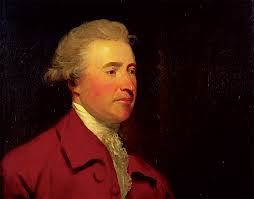
Edmund Burke vs. US Conservatives. Reading From My Latest Book Project: The Gap in God’s Country

theory stream I tap into is Burkean conservatism. Because I’m doing a series on Burke right now, I thought I’d read the section from the draft introduction that has to do with classical conservatism. … More Edmund Burke vs. US Conservatives. Reading From My Latest Book Project: The Gap in God’s Country

Edmund Burke on “The Rights of Man” (Reflections 4)

I discuss Edmund Burke’s views on the “Rights of Man” as advocated by the French Revolution, in contrast with what Burke thought of as the rights of human beings living in various nations and communities. Burke critiques the idea of universal natural rights in favor of inherited rights which can be modified and applied differently over time in response to changing conditions and needs. Burke does supply a list of things that people deserve as members of society and puts them forward as the real rights of men. … More Edmund Burke on “The Rights of Man” (Reflections 4)

Edmund Burke’s Noble Lie (Reflections 3)

After defending the English Revolution of 1688 as a thing of a different and more respectable sort than the French Revolution of 1789, Burke goes on to argue against universal rights in favor of the particular rights of particular people. He believes that people receive their rights through inheritance from past practice, and that the … More Edmund Burke’s Noble Lie (Reflections 3)

Edmund Burke: Is Revolution Ever OK? (Reflections 2)

The first part of Edmund Burke’s Reflections on the Revolution of France takes on England’s Revolution Society and Rev. Richard Price, whom Burke considered a dangerous and radical agitator. We begin to see that Burke does not like mixing religion and politics, and he dislikes politics practiced with religious zeal. He argues that there is a big difference between the Glorious Revolution in England in 1688 and the French Revolution of 1789. Is he right? … More Edmund Burke: Is Revolution Ever OK? (Reflections 2)