The Vectoralist Class–Introduction to McKenzie Wark

This is first in a series of videos on McKenzie Wark’s book Capital is Dead: Is This Something Worse? I introduce Wark and some of the main ideas in the introduction, setting the stage for the rest of the book. Wark argues that we should break free from our love affair with capitalism, carried on by both the right and left, that thinks of capital as eternal. Further we should break free of old narratives such as a worshipful loyalty to political theories of the past. We learn a little about how we are both consumer and product, and how the ruling class, in Wark’s view, is no longer land-owning or even factory owning, but information owning. And how is information successfully owned and wielded in a world in which it is so prevalent and seemingly hard to control? Wark promises to show us how. … More The Vectoralist Class–Introduction to McKenzie Wark
To the Fan Dong (Reactionaries)

You exist in your make-believe world. Your world where if men were gentlemen and women were ladies, all would be well. Where, if only, people went to church and believed the jot and tittle of the latest orthodoxy (read: what you believe is the oldest orthodoxy). Where if only everyone was like you—if only there was agreement that kids just needed to learn their ABC’s and 123’s and if everyone was SAVED. … More To the Fan Dong (Reactionaries)

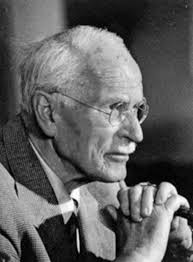
What Would Carl Jung Think of Capitalism and Automation? A reading from my latest article. (Audio)

This is a segment of a longer article I wrote for Harbinger: Journal of Social Ecology that was published in October 2019. It’s entitled “Jordan Peterson, Carl Jung, and the Challenge for Social Ecology.” The first part of the article is a critique of the limitations of Peterson’s political stands, which will take about 10 minutes to read, but much of the article explores a comparison of the ideas of Social Ecology founder Murray Bookchin and psychologist Carl Jung. This segment is on Jung’s political ideas with a little help from some of Charles Taylor’s concepts. Reflecting on Peterson’s take on politics, we find that Carl Jung’s ideas on what causes ideological extremism is quite a bit more penetrating as he goes back to the Enlightenment and trends like industrialization and urbanization as the underlying causes of dangerous ideological movements, dehumanizing economics and overbearing governments. Here’s the link to the article. https://harbinger-journal.com/issue-1/jordan-peterson-carl-jung-and-the-challenge-for-social-ecology/
More What Would Carl Jung Think of Capitalism and Automation? A reading from my latest article. (Audio)

What Would Carl Jung Think of Capitalism and Automation? A reading from my latest article.

This is a segment of a longer article I wrote for Harbinger: Journal of Social Ecology that was published in October 2019. It’s entitled “Jordan Peterson, Carl Jung, and the Challenge for Social Ecology.” The first part of the article is a critique of the limitations of Peterson’s political stands, which will take about 10 minutes to read, but much of the article explores a comparison of the ideas of Social Ecology founder Murray Bookchin and psychologist Carl Jung. This segment is on Jung’s political ideas with a little help from some of Charles Taylor’s concepts. Reflecting on Peterson’s take on politics, we find that Carl Jung’s ideas on what causes ideological extremism is quite a bit more penetrating as he goes back to the Enlightenment and trends like industrialization and urbanization as the underlying causes of dangerous ideological movements, dehumanizing economics and overbearing governments. Here’s the link to the article. https://harbinger-journal.com/issue-1/jordan-peterson-carl-jung-and-the-challenge-for-social-ecology/More What Would Carl Jung Think of Capitalism and Automation? A reading from my latest article.

St. Benedicts Needed? MacIntyre and the New Dark Ages (After Virtue, Conclusions, Audio)

In this conclusion to the series on Alasdair MacIntyre’s After Virtue I think about the significance of MacIntyr’e’s views on modern liberalism/capitalism (neoliberalism) and his ideas for the elements of stronger community. MacIntyre argues that we have entered a new Dark Ages without recognizing it, and that we need new, and probably very different, St. Benedicts to create ways of life to rebuild and preserve community in difficult times. The new Dark Age, as MacIntyre sees it, is a product of the amoral hyper-bureaucratization, technical rationality and fragmented responsibility characteristic of our times. After Virtue does not have all the answers about how to get past these problems, but his views on the elements involved in stronger community are definitely a start. … More St. Benedicts Needed? MacIntyre and the New Dark Ages (After Virtue, Conclusions, Audio)

St. Benedicts Needed? MacIntyre and the New Dark Ages (After Virtue, Conclusions)

In this conclusion to the series on Alasdair MacIntyre’s After Virtue I think about the significance of MacIntyr’e’s views on modern liberalism/capitalism (neoliberalism) and his ideas for the elements of stronger community. MacIntyre argues that we have entered a new Dark Ages without recognizing it, and that we need new, and probably very different, St. Benedicts to create ways of life to rebuild and preserve community in difficult times. The new Dark Age, as MacIntyre sees it, is a product of the amoral hyper-bureaucratization, technical rationality and fragmented responsibility characteristic of our times. After Virtue does not have all the answers about how to get past these problems, but his views on the elements involved in stronger community are definitely a start. … More St. Benedicts Needed? MacIntyre and the New Dark Ages (After Virtue, Conclusions)

Jordan Peterson, Carl Jung, and the Challenge for Social Ecology (Harbinger)

Harbinger, the journal of the Institute for Social Ecology, has re-launched, and I aimed to be in the inaugural edition, which was recently published. The founder of social ecology was Murray Bookchin, and the Institute for Social Ecology carries on his legacy. While I do not fully agree with the ideas of either Social Ecology or Canadian psychologist and public intellectual Jordan Peterson, I resonate with some of the concerns of both positions. I thought it would be interesting to think about what would happen if the ideas of these two very different thinkers were put into dialogue with each other. Here is the result. … More Jordan Peterson, Carl Jung, and the Challenge for Social Ecology (Harbinger)

Introduction to Alasdair MacIntyre and After Virtue

After Virtue was first published in 1981, but MacIntyre wrote a new preface in 2007 reasserting his full confidence in the arguments. After Virtue promises to take on emotivism and moral relativism generally and to help us navigate not toward moral absolutism but toward moral judgment through a renewal of Aristotelian virtue ethics. This video introduces key themes, including his disagreement with communitarianism, and a bit of the life of MacIntyre–who’s still going at 90– in preparation for a reading of the third edition of After Virtue. … More Introduction to Alasdair MacIntyre and After Virtue

Climate Strike v. Occupy: Do Protests Matter? (Audio–Dreaming Dangerously 7)

Do protests and demonstrations accomplish anything? And, if they often don’t, why? Answering that question should determine what we choose to do, and how, in any particular call for action. Zizek’s Chapter 7 on Occupy Wall Street serves as a launching pad for some observations on political demonstrations, including the Climate Strike scheduled for September 20, 2019.\ … More Climate Strike v. Occupy: Do Protests Matter? (Audio–Dreaming Dangerously 7)