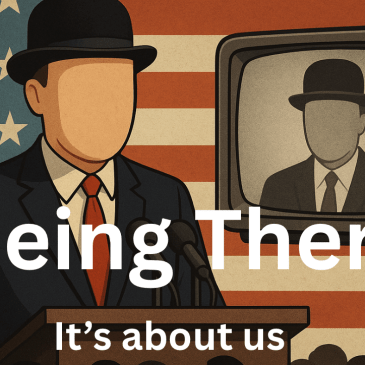
From Gardener to Politician: The Impact of Media in ‘Being There’ (1)

We begin a new series inspired by Jerzy Kosinski’s classic novel, Being There (1971). Being There is a satirical and allegorical tale about the adventures of Chance, a simple gardener who has previously lived a sheltered life saturated with television as his main source of human contact. Chance is thrown into the media spotlight by accident, propelling him to the top echelons of American politics, as people read wisdom into everything he says. … More From Gardener to Politician: The Impact of Media in ‘Being There’ (1)

Thomas Aquinas’s Natural Law Theory: Brief Explanation (Aristotle’s Virtue Ethics Public Segment #4)

This is a segment of an hour long lecture followed by a Q & A session for patrons of the Maurin Academy. To get the entire course and all the courses, reading groups and our lecture series, support us on Patreon: https://patreon.com/maurinacademyMore Thomas Aquinas’s Natural Law Theory: Brief Explanation (Aristotle’s Virtue Ethics Public Segment #4)

The Quality of Friendships: Does it Matter for Politics? Aristotle’s Virtue Ethics Public Segment #3

This is a segment of an hour long lecture followed by a Q & A session for patrons of the Maurin Academy. To get the entire course and all the courses, reading groups and our lecture series, support us on Patreon: https://patreon.com/maurinacademyMore The Quality of Friendships: Does it Matter for Politics? Aristotle’s Virtue Ethics Public Segment #3

Introduction to Aristotle’s Virtue Ethics, Public Segment #2: The Mean Between Extremes

This is a segment of an hour long lecture followed by a Q & A session for patrons of the Maurin Academy. To get the entire course and all the courses, reading groups and our lecture series, support us on Patreon: https://patreon.com/maurinacademyMore Introduction to Aristotle’s Virtue Ethics, Public Segment #2: The Mean Between Extremes

Are Checks and Balances Necessary in the US Constitution? (Federalist 51, Part 1)

The American founders were concerned about one branch of government becoming too powerful and trampling on the freedoms of Americans by suppressing the other branches’ freedom. Here Madison or Hamilton (which one is not clear) discusses how the new constitution tries to reduce the chances of this happening through separation of powers and checks and balances. … More Are Checks and Balances Necessary in the US Constitution? (Federalist 51, Part 1)

Did Madison Foresee the Demise of Democracy? (Federalist 10, Part 3)

Madison devoted the majority of Federalist paper #10 to the dangers of a violent majority faction and corrupt demagogues. In this part of the paper, we see Madison hoping that a large republic will prevent such a faction from existing, or if it exists, will blunt its ability to tyrannize over the rest of the citizens. … More Did Madison Foresee the Demise of Democracy? (Federalist 10, Part 3)