Rethinking the Christian Contribution: Walter Brueggemann’s Imagination (Audio)

I introduce some of theologian Walter Brueggemann’s themes in his classic “The Prophetic Imagination,” discussing some of the ways we can avail ourselves of a common narrative to try to gain some freedom against oppression, whether of the old-style Pharoah or the new version of less visible but very powerful economic and political forces that keep people working for an agenda they wouldn’t naturally choose. Through Brueggemann’s eyes, we are living in the imagination of “Royal consciousness” but we could be living in the imagination of God. What does this mean, not just for Christians, but generally for people who are trying to find some way to push back and gain some freedom? … More Rethinking the Christian Contribution: Walter Brueggemann’s Imagination (Audio)
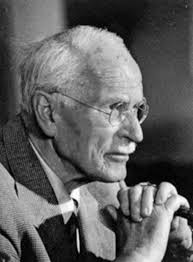
What Would Carl Jung Think of Capitalism and Automation? A reading from my latest article. (Audio)

This is a segment of a longer article I wrote for Harbinger: Journal of Social Ecology that was published in October 2019. It’s entitled “Jordan Peterson, Carl Jung, and the Challenge for Social Ecology.” The first part of the article is a critique of the limitations of Peterson’s political stands, which will take about 10 minutes to read, but much of the article explores a comparison of the ideas of Social Ecology founder Murray Bookchin and psychologist Carl Jung. This segment is on Jung’s political ideas with a little help from some of Charles Taylor’s concepts. Reflecting on Peterson’s take on politics, we find that Carl Jung’s ideas on what causes ideological extremism is quite a bit more penetrating as he goes back to the Enlightenment and trends like industrialization and urbanization as the underlying causes of dangerous ideological movements, dehumanizing economics and overbearing governments. Here’s the link to the article. https://harbinger-journal.com/issue-1/jordan-peterson-carl-jung-and-the-challenge-for-social-ecology/
More What Would Carl Jung Think of Capitalism and Automation? A reading from my latest article. (Audio)

What Would Carl Jung Think of Capitalism and Automation? A reading from my latest article.

This is a segment of a longer article I wrote for Harbinger: Journal of Social Ecology that was published in October 2019. It’s entitled “Jordan Peterson, Carl Jung, and the Challenge for Social Ecology.” The first part of the article is a critique of the limitations of Peterson’s political stands, which will take about 10 minutes to read, but much of the article explores a comparison of the ideas of Social Ecology founder Murray Bookchin and psychologist Carl Jung. This segment is on Jung’s political ideas with a little help from some of Charles Taylor’s concepts. Reflecting on Peterson’s take on politics, we find that Carl Jung’s ideas on what causes ideological extremism is quite a bit more penetrating as he goes back to the Enlightenment and trends like industrialization and urbanization as the underlying causes of dangerous ideological movements, dehumanizing economics and overbearing governments. Here’s the link to the article. https://harbinger-journal.com/issue-1/jordan-peterson-carl-jung-and-the-challenge-for-social-ecology/More What Would Carl Jung Think of Capitalism and Automation? A reading from my latest article.

Jordan Peterson, Carl Jung, and the Challenge for Social Ecology (Harbinger)

Harbinger, the journal of the Institute for Social Ecology, has re-launched, and I aimed to be in the inaugural edition, which was recently published. The founder of social ecology was Murray Bookchin, and the Institute for Social Ecology carries on his legacy. While I do not fully agree with the ideas of either Social Ecology or Canadian psychologist and public intellectual Jordan Peterson, I resonate with some of the concerns of both positions. I thought it would be interesting to think about what would happen if the ideas of these two very different thinkers were put into dialogue with each other. Here is the result. … More Jordan Peterson, Carl Jung, and the Challenge for Social Ecology (Harbinger)

Introduction to Alasdair MacIntyre and After Virtue (Audio)

After Virtue was first published in 1981, but MacIntyre wrote a new preface in 2007 reasserting his full confidence in the arguments. After Virtue promises to take on emotivism and moral relativism generally and to help us navigate not toward moral absolutism but toward moral judgment through a renewal of Aristotelian virtue ethics. This video introduces key themes, including his disagreement with communitarianism, and a bit of the life of MacIntyre–who’s still going at 90– in preparation for a reading of the third edition of After Virtue. … More Introduction to Alasdair MacIntyre and After Virtue (Audio)

Introduction to Alasdair MacIntyre and After Virtue

After Virtue was first published in 1981, but MacIntyre wrote a new preface in 2007 reasserting his full confidence in the arguments. After Virtue promises to take on emotivism and moral relativism generally and to help us navigate not toward moral absolutism but toward moral judgment through a renewal of Aristotelian virtue ethics. This video introduces key themes, including his disagreement with communitarianism, and a bit of the life of MacIntyre–who’s still going at 90– in preparation for a reading of the third edition of After Virtue. … More Introduction to Alasdair MacIntyre and After Virtue

Consumerism or Death: Memento Mori (Radical Christianity audio)

A discussion of the book An Other Kingdom: Departing the Consumer Culture by Block, Brueggemann and McKnight, especially on the idea of the fear of death causing the consumer addiction, the loss of which can be quite disturbing: “Grief occurs to us because of the impossibility of perfection and immortality. The free market consumer ideology calls us to infinite possibility. It promises perfection (you can always improve your lot in life) and immortality (there is an answer to aging). This is its value proposition. Grow or die. Consume or be unhappy. The market is an engine for denial instead of grieving.” Some practical ways to depart are discussed. … More Consumerism or Death: Memento Mori (Radical Christianity audio)