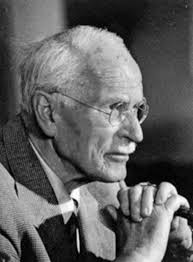
What Would Carl Jung Think of Capitalism and Automation? A reading from my latest article. (Audio)

This is a segment of a longer article I wrote for Harbinger: Journal of Social Ecology that was published in October 2019. It’s entitled “Jordan Peterson, Carl Jung, and the Challenge for Social Ecology.” The first part of the article is a critique of the limitations of Peterson’s political stands, which will take about 10 minutes to read, but much of the article explores a comparison of the ideas of Social Ecology founder Murray Bookchin and psychologist Carl Jung. This segment is on Jung’s political ideas with a little help from some of Charles Taylor’s concepts. Reflecting on Peterson’s take on politics, we find that Carl Jung’s ideas on what causes ideological extremism is quite a bit more penetrating as he goes back to the Enlightenment and trends like industrialization and urbanization as the underlying causes of dangerous ideological movements, dehumanizing economics and overbearing governments. Here’s the link to the article. https://harbinger-journal.com/issue-1/jordan-peterson-carl-jung-and-the-challenge-for-social-ecology/
More What Would Carl Jung Think of Capitalism and Automation? A reading from my latest article. (Audio)

What Would Carl Jung Think of Capitalism and Automation? A reading from my latest article.

This is a segment of a longer article I wrote for Harbinger: Journal of Social Ecology that was published in October 2019. It’s entitled “Jordan Peterson, Carl Jung, and the Challenge for Social Ecology.” The first part of the article is a critique of the limitations of Peterson’s political stands, which will take about 10 minutes to read, but much of the article explores a comparison of the ideas of Social Ecology founder Murray Bookchin and psychologist Carl Jung. This segment is on Jung’s political ideas with a little help from some of Charles Taylor’s concepts. Reflecting on Peterson’s take on politics, we find that Carl Jung’s ideas on what causes ideological extremism is quite a bit more penetrating as he goes back to the Enlightenment and trends like industrialization and urbanization as the underlying causes of dangerous ideological movements, dehumanizing economics and overbearing governments. Here’s the link to the article. https://harbinger-journal.com/issue-1/jordan-peterson-carl-jung-and-the-challenge-for-social-ecology/More What Would Carl Jung Think of Capitalism and Automation? A reading from my latest article.

St. Benedicts Needed? MacIntyre and the New Dark Ages (After Virtue, Conclusions, Audio)

In this conclusion to the series on Alasdair MacIntyre’s After Virtue I think about the significance of MacIntyr’e’s views on modern liberalism/capitalism (neoliberalism) and his ideas for the elements of stronger community. MacIntyre argues that we have entered a new Dark Ages without recognizing it, and that we need new, and probably very different, St. Benedicts to create ways of life to rebuild and preserve community in difficult times. The new Dark Age, as MacIntyre sees it, is a product of the amoral hyper-bureaucratization, technical rationality and fragmented responsibility characteristic of our times. After Virtue does not have all the answers about how to get past these problems, but his views on the elements involved in stronger community are definitely a start. … More St. Benedicts Needed? MacIntyre and the New Dark Ages (After Virtue, Conclusions, Audio)

St. Benedicts Needed? MacIntyre and the New Dark Ages (After Virtue, Conclusions)

In this conclusion to the series on Alasdair MacIntyre’s After Virtue I think about the significance of MacIntyr’e’s views on modern liberalism/capitalism (neoliberalism) and his ideas for the elements of stronger community. MacIntyre argues that we have entered a new Dark Ages without recognizing it, and that we need new, and probably very different, St. Benedicts to create ways of life to rebuild and preserve community in difficult times. The new Dark Age, as MacIntyre sees it, is a product of the amoral hyper-bureaucratization, technical rationality and fragmented responsibility characteristic of our times. After Virtue does not have all the answers about how to get past these problems, but his views on the elements involved in stronger community are definitely a start. … More St. Benedicts Needed? MacIntyre and the New Dark Ages (After Virtue, Conclusions)

Jordan Peterson, Carl Jung, and the Challenge for Social Ecology (Harbinger)

Harbinger, the journal of the Institute for Social Ecology, has re-launched, and I aimed to be in the inaugural edition, which was recently published. The founder of social ecology was Murray Bookchin, and the Institute for Social Ecology carries on his legacy. While I do not fully agree with the ideas of either Social Ecology or Canadian psychologist and public intellectual Jordan Peterson, I resonate with some of the concerns of both positions. I thought it would be interesting to think about what would happen if the ideas of these two very different thinkers were put into dialogue with each other. Here is the result. … More Jordan Peterson, Carl Jung, and the Challenge for Social Ecology (Harbinger)

Fake News is Not the Problem (Audio)

I’m setting aside After Virtue for this week to deal with the problem of “fake news.” It appears to be a real threat to democracy. Is fake news the threat we should focus on, or is fake news the result of a larger problem–our excessive gullibility. And, what causes the excessive gullibility of ideological ciphers, fan-boys, shills, tools and zealots?
More Fake News is Not the Problem (Audio)

Can We Escape Our Past? Self & Responsibility (After Virtue 9 Audio)

In chapters 13-15 of Alasdair MacIntyre’s After Virtue, we get to contemplate the idea that we are much more affected by our personal story and and our history than we want to admit. Are we capable of making ourselves into just anything we want to be, regardless of the cards we were dealt? Are we free of responsibility for what we’ve done in our personal past or what our ancestors have done? MacIntyre’s answer is that the existential self, capable of being radically chosen at any given point, is a fantasy which, rather than freeing us, can leave us aimless and depressed. What, then, is the benefit of seeing ourselves as MacIntyre wants us to–benefited but also burdened by the context into which we are born? And how do the virtues fit into all of this? … More Can We Escape Our Past? Self & Responsibility (After Virtue 9 Audio)

Can We Escape Our Past? Self & Responsibility (After Virtue 9)

In chapters 13-15 of Alasdair MacIntyre’s After Virtue, we get to contemplate the idea that we are much more affected by our personal story and and our history than we want to admit. Are we capable of making ourselves into just anything we want to be, regardless of the cards we were dealt? Are we free of responsibility for what we’ve done in our personal past or what our ancestors have done? MacIntyre’s answer is that the existential self, capable of being radically chosen at any given point, is a fantasy which, rather than freeing us, can leave us aimless and depressed. What, then, is the benefit of seeing ourselves as MacIntyre wants us to–benefited but also burdened by the context into which we are born? And how do the virtues fit into all of this? … More Can We Escape Our Past? Self & Responsibility (After Virtue 9)

From Hero to Consumer (After Virtue 8, audio)

This video covers ideas in chapters 10-12 in Alasdair MacIntyre’s After Virtue. In pursuit of an alternative to value neutrality and the fragmented responsibility characterized by modern bureaucracy, Alasdair MacIntyre attempts to reconstruct a history of Western moral development. His aim is to help society re-learn Aristotelian teleology and virtue ethics. But to locate what he’s advocating he goes back to the Homeric Greek heroic ideal, then traces the emergence of a new kind of self (one that is self-conscious and aware of the distinction between self and society) in democratic Athens. Out of this society emerged Aristotle, whose thought came closer to what seems to be MacIntyre’s ideal–one that consciously deals with ethics both at the level of the particular society and at the level of universal claims. MacIntyre distances himself from Aristotle’s “metaphysical biology” and therefore from Aristotle’s claims that there are biologically determined natural roles and different virtues for different people, claiming that Aristotle mistook his society’s particular cultural norms for eternal truths. But can MacIntyre have Aristotle’s teleology and virtue ethics without his biological determinism? That is yet to be seen.
More From Hero to Consumer (After Virtue 8, audio)